Ladyfinger |
Soil and Climate
| Sowing
| Manures and Fertilizers
| Plucking and Production
|Variety
|
| |

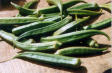
Ladyfinger is a popular vegetable. It contains adequate amounts of vitamin A, B and C.
|
| |
Soil and Climate
|
| |
Long, warm and wet climate is considered to be the best. For seed-growth 25-30 degree centigrade temperature is suitable, below 16 degree centigrade the seeds do not grow. This crop can grow both in summer and before summer. Ladyfinger can be grown in any place with good drainage system. The pH of soil should be 6-6.8.
|
| [ Top ] |
Sowing
|
| |
 The seeds of Ladyfinger are sowed directly into the soil. Cultivate the soil two or three times before sowing the seeds. Divide the farm into proper areas so that irrigation becomes easy. Prepare rows for the drainage of rain.
|
| [ Top ] |
Manures and Fertilizers
|
| |
 Nearly 15-20 tons of decomposed fertilizer, 300 kg Ammonium Sulphate, 400 kg SuperPhosphate and 100 kg Murate of Potash per hectare should be mixed with soil before sowing. 30-35 days after sowing the crop, 300 kg Ammonium Sulphate or 100 kg Urea should be applied twice in 15 days interval.
|
| [ Top ] |
Plucking and Production
|
| |
 Ladyfinger should be plucked every 3rd or 4th day. If the plucking is delayed the fruit will be spoilt. Fruit should be plucked 5-7 days after the growing of flower. By proper cultivation, good variety and proper fertilization the yield will be around 130-150 quintal.
|
| [ Top ] |
Variety
|
| |
Selection of varieties depends mainly on the following factors:
- Method Of Sowing
- Pest and Disease
- Irrigration Facilities
- Climatic Conditions
|
| For more Information register yourself at Agroecommerce.com |
| |