Climatic Requirements
| Season
| Soil
|Variety
|
| |
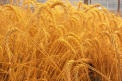 Wheat is the main cereal crop in India. In respect of area and production it occupies the second place, being exceed only by rice. Though the maximum acreage and production of wheat is Uttar Pradesh, Punjab gives the highest average yield per hectare (2715 kg) followed by Delhi (2685 kg). However, the average wheat yield is only 1574 kg per hectare in India which is much lower compared to other nations of the world.
|
| |
Climatic Requirements
|
| |
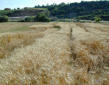 Wheat crop has wide adaptability. It can be grown not only in the tropical and sub-tropical zones but also in the temperate zone and the cold tracts of the far north, beyond even 60 degree latitude.The best wheats are produced in areas favoured with cool, moist weather during the major portion of the growing period followed by dry, warm weather to enable the grain to ripe properly. It can be cultivated from sea level to as high as 3300 meters.
|
| [ Top ] |
Season
|
| |

Wheat is mainly a Rabi (winter) season crop in India.
|
| [ Top ] |
Soil
|
| |
 Soils with clay loam or loam texture, good structure and moderate water holding capacity are ideal for wheat cultivation. Care should be taken to avoid very porous and excessively drained soils. Soil should have neutral pH. Heavy soils with good drainage are suitable for wheat cultivation under dry conditions. These soils absorb and retain rain water well.
|
| [ Top ] |
Variety
|
| |
 Good quality and productivity of wheat is possible only if a locally adapted, high yielding disease resistant variety is chosen for cultivation in a particular area. A number of dwarf and semi-dwarf varieties have been available in the market for cultivation in different agro-climatic zones. Selection of varieties depends mainly on the following factors:
- Method Of Sowing
- Crop Rotation
- Pest and Disease
- Irrigration Facilities
- Climatic Conditions
|
| For more Information register yourself at Agroecommerce.com |
| |