Jute |
Climatic Requirements
| Season
| Soil
|Variety
|
| |
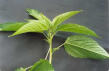
Jute has been cultivated in India for very long time. It was exported to Europe the first time in 1828. In India the crop is grown over an area of about 8.9 lakh hectares with total production of about 65 lakh bales of 180 kg each.
|
| |
Climatic Requirements
|
| |
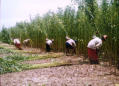
Jute thrives best under warm and humid climate with temperature ranging from 24 to 37 degree centigrade, the optimum being around 34 degree centigrade. The most suitable is well distributed total rainfall of 150 cetimeter per year from which 25 centimeter precipitation is between March and May. Alternate period of sunshine and rainfall is the most beneficial.
|
| [ Top ] |
Season
|
| |
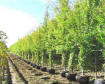
For Jute moderate season that is between the rainy reason and the summer season is the best.
|
| [ Top ] |
Soil
|
| |

Jute can be grown on all kind of soils from clay to sandy loam but loamy alluvial soil suits it most. Jute thrives best in soils with neutral pH between 6.0-7.5. Below or above this pH, yield of crop suffers.
|
| [ Top ] |
Variety
|
| |
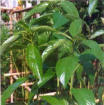 Some of the varieties of jute are released by the Jute Agricultural Research Institute, Barrackpore. They proved to be very beneficial for the producers. This provides them opportunity for better production. Selection of varieties depends mainly on the following factors:
- Method Of Sowing
- Crop Rotation
- Pest and Disease
- Irrigration Facilities
- Climatic Conditions
|
| For more Information register yourself at Agroecommerce.com |
| |