Rice |
Climatic Requirements
| Season
| Soil
|Variety
|
| |
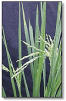
Rice provides about 22 percent of the world supplies of calories and 17 percent of the proteins. Maximum area under rice is in Asia. Among the rice growing countries, India has the largest area (40.2 million) hectares followed by China and Bangladesh. Average rice yield of India is only 1339 kg per hectare. In India rice is grown in almost all the states.
|
| |
Climatic Requirements
|
| |
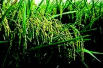
Rice cultivation in India extends from 8 to 35 degree north latitude and from sea level to as high as 3000 meters. Rice crop need hot and humid climate. It is best suited for the regions having high humidity, prolonged sunshine and an assured supply of water. The average temperature required throughout the life span of a crop is from 21-37 degree centigrade. At the time of cultivation it requires higher temperature than growth. Temperature requirement for blooming is in the range of 26.5 to 29.5 degree centigrade.
|
| [ Top ] |
Season
|
| |
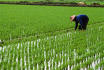
Rice-growing season varies in different parts of India, depending on temperature, rainfall and other climatic conditions. In parts of eastern and peninsular India, the mean temperature throughout the year are favourable for rice cultivation hence 2-3 crops of rice are harvested in a year. In northern and western part of India where winter temperature are fairly low only one crop of rice is harvested during the Kharif season.
|
| |
Soil
|
| [ Top ] |
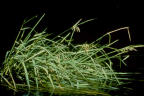 Soils with good water retention capacity with good amount of clay and organic matter are ideal for rice cultivation. Clay or clay loams are most suited for rice cultivation. Such soils are capable of holding water for long and sustain crop. Rice being a semi-aquatic crop, grows best under sub-merge conditions. It grows well in soils having a pH range between 5.5 and 6.5.
|
| [ Top ] |
Variety
|
| |
 The dwraf high yielding varieties have higher yield potential than the traditional or so called tall varieties. Under the low fertility too, the high yielding drawf yield comparatively more than the tall varieties. Selection of varieties depends mainly on the following factors:
- Method Of Sowing
- Crop Rotation
- Pest and Disease
- Irrigration Facilities
- Climatic Conditions
|
| For more Information register yourself at Agroecommerce.com |
| |