Chrysanthemum |
Transplanting
| Climate
| Growth
|Horticulture
| Variety
|
| |
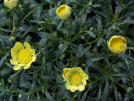
Chrysanthemum is next to rose in importance among the flower crops in the world. It occupies second position in world flower trade after rose and carnation and third postion in India after jasmine and rose.
|
| |
Transplanting
|
| |
Soon after the land preparation, 10-12 tons/acre of well decomposed farm yard manure is incorporated into the soil. Apply 50 kg of nitrogen, 160 kg P2O and 80 kg K2O per acre as basal dose. Top dress the crop with 50 kg nitrogen/acre at the time of the first pinching.
- Intercultivation and irrigation
|
| [ Top ] |
Climate
|
| |
 Soil should be well drained, sandy loam with pH between 6.5-7.0. Chrysanthemums are highly sensitive to waterlogging. Being a short day plant it responds differently to the enviroment. Depending on the location, planting date should be adjusted so that cultivars are exposed to long days to attain sufficient vegetative growth and short days for flower production. It can be successfully grown upto an altitude of 1200 m from MSL. Among the climatic factors, light is the most important factor which influences the growth and flowering behaviour.
|
| [ Top ] |
Growth
|
| |
 Growth regulation can be done by controlling the environment as well as by use of plant growth regulators. Long day condition result in extended vegetative growth and immediate shift into a short day condition result in flower bud induction.
|
| [ Top ] |
Horticulture
|
| |
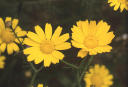 Special practices like the staking, pinching and disbudding are important for proper growth and flower yield.
- Stacking
- Pinching
- Standard Chrysanthemum
- Spray Chrysanthemum
|
| [ Top ] |
Variety
|
Selection of varieties depends mainly on the following factors:
- Manure and Fertilizers
- Disease
- Production
- Cost
|
| For more Information register yourself at Agroecommerce.com |
| |