Lily |
Soil
| Climate
| Nutrition
|Water Management
| Variety
|
| |

Lily belongs to genus Lilium, one of the most important bulbous crop of Liliceae family grown commercially for cut flowers in India. It has beautiful attractive and bright flowers with comparatively long vase life.
|
| |
Soil
|
| |
Lilies can be grown in almost all soils. It is however, important that growers should ensure the soil has good structure particularly the top layer and it should be well drained throughout the growing period.
|
| [ Top ] |
Climate
|
| |
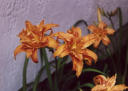 The ideal climate for lily basically depends on two factors:
- Temperature
- Light Intensity
|
| [ Top ] |
Nutrition
|
| |
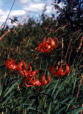 Nitrogen should be applied @ 1 kg in the form of calcium ammonium nitrate (CAN) per 100 sq.m, three weeks after planting. If the plants are not strong enough during growing season due to nitrogen deficiency, top dressing with 1 kg of quick release nitrogen (urea) per 100 sq.m may be supplied three weeks before flower harvesting.
|
| [ Top ] |
Seedlings
|
| |
 To prepare the nursery, dig the soil properly to 30 cm deep and mix the rotten manure or the rotten leaves manure to make the soil drier. After that in nursery 15 cm high and 5-6 m long rows are made. For one hectare area 700-800 grams seeds are sufficient after preparing the rows. Seeds are sown at the distance of 6-8 cm from one another and at 2 cm deep. After that seeds are covered with a thin sheet of well filtered manure. Irrigate the nursery daily.
|
| [ Top ] |
Variety
|
| |
Selection of varieties depends mainly on the following factors:
- Manure and Fertilizers
- Disease
- Production
- Cost
|
| For more Information register yourself at Agroecommerce.com |
| |